✓ Key Takeaways
- ✓Kitchen renovations range $15K–$80K; mid-range remodels average $35K–$55K, with labor, materials, and permits broken down separately
- ✓Cabinets and countertops are the largest material costs; appliances have volatile pricing tied to 2026 CPI inflation (287.4 for household appliances per BLS)
- ✓Regional variation is significant: Northeast runs 20–30% higher than Midwest; always normalize bids for geography, not just price
- ✓Never hire a contractor who says permits aren't needed, demands full upfront payment, or won't provide itemized quotes with written timeline
- ✓Save 10–15% by keeping the existing layout, refacing cabinets, doing your own demolition/painting, and choosing laminate over quartz if budget is tight
A kitchen renovation typically runs $15,000 to $80,000, with mid-range remodels landing around $35,000–$55,000. That spread exists because labor, materials, and scope vary wildly—and most homeowners don't know where contractors actually pad the bill. I'll show you the real cost structure, regional differences, and exactly what to watch for.
💰 Quick Cost Summary
- $Kitchen renovations range $15K–$80K; mid-range remodels average $35K–$55K, with labor, materials, and permits broken down separately
- $Cabinets and countertops are the largest material costs; appliances have volatile pricing tied to 2026 CPI inflation (287.4 for household appliances per BLS)
- $Regional variation is significant: Northeast runs 20–30% higher than Midwest; always normalize bids for geography, not just price
- $Never hire a contractor who says permits aren't needed, demands full upfront payment, or won't provide itemized quotes with written timeline
Total Cost Range & Breakdown
Kitchen renovations break into three buckets: labor (typically 30–40% of the total), materials (45–55%), and permits (2–5%). On a $40,000 project, expect roughly $12,000–$16,000 in labor, $18,000–$22,000 in materials, and $800–$2,000 in permits and inspections.
According to the Bureau of Labor Statistics, household appliances CPI hit 287.4 in February 2026, reflecting continued price pressure on refrigerators, ranges, and dishwashers—the big-ticket items that eat your budget. Lumber and wood products are running at 270.3 PPI as of February 2026, which means custom cabinetry and solid-wood counters aren't getting cheaper. These aren't abstract numbers; they translate directly to the quote your contractor hands you.
The scope determines everything. A cosmetic refresh—new paint, hardware, maybe a backsplash—runs $10,000–$20,000. A moderate remodel with cabinet refacing, new counters, and some appliance upgrades hits $30,000–$50,000. A full gut-and-rebuild with new cabinets, plumbing relocation, electrical work, and high-end finishes runs $60,000–$120,000 or more.
Get an instant estimate for your project in 60 seconds.
Calculate My Cost →Labor Costs: Where Most Homeowners Overpay
Labor on a kitchen remodel typically runs $50–$150 per hour, depending on your region and the contractor's experience. On most jobs, you're paying for general carpenters ($45–$85/hr), tile setters ($55–$120/hr), electricians ($75–$150/hr), plumbers ($70–$140/hr), and sometimes a general contractor managing the whole operation.
Here's what I see repeatedly: homeowners get a single all-in price and have no idea if the GC is paying his crew $35/hour or $100/hour. The difference shows up in workmanship. A solid crew will spend an extra day getting your cabinet edges perfect; a cheaper crew will tape and paint over gaps. That's a real $800–$1,500 difference per job, and it happens because nobody asked the right questions.
Labor also blows up when your existing kitchen has surprises—rotted subfloor under the sink, old plumbing that can't support new layout, walls that aren't square. Every time I've seen a "surprise cost" emerge mid-project, it's because the initial walkthrough didn't probe deep enough. Budget 10–15% contingency in labor specifically for these discoveries. If your estimate is $16,000 in labor, add $1,600–$2,400.
Materials: Cabinet, Countertop & Appliance Reality
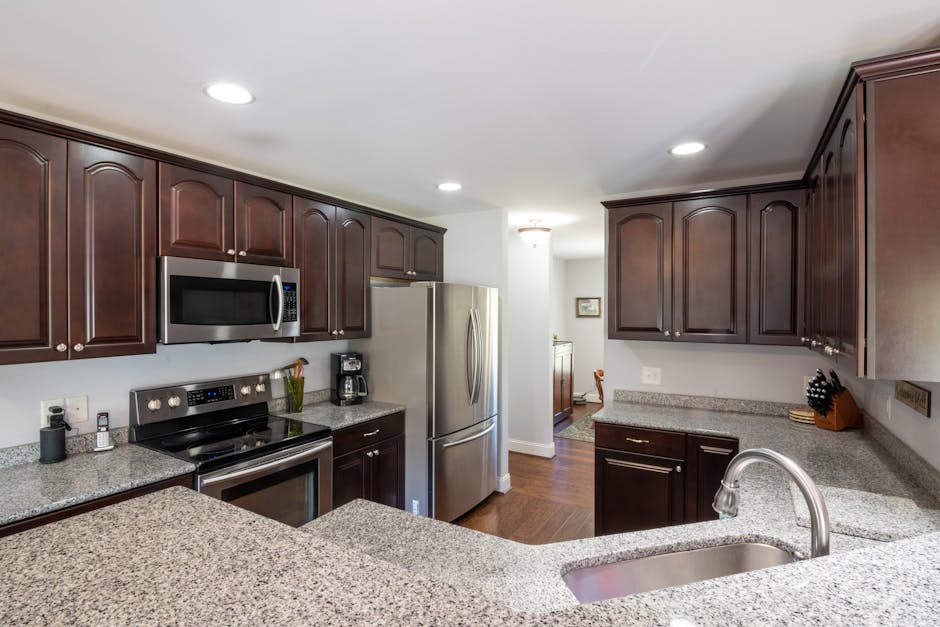
Cabinets are the single largest material cost, typically 25–35% of the total budget. Stock cabinets (IKEA, Home Depot Shaker style) run $4,000–$8,000 for a typical 10×12 kitchen. Semi-custom cabinets from brands like Waypoint or Kemper range $8,000–$15,000. Full custom (local cabinetmaker, dovetail joints, solid wood) goes $15,000–$30,000+. I've seen homeowners pick semi-custom online and then pay an extra $2,000–$3,000 on-site because the boxes don't fit the space—always hire a local cabinet shop for measurement and installation.
Countertops show wild variation. Laminate (Formica-type) runs $1,500–$3,000 installed. Solid-surface (Corian) hits $3,000–$6,000. Granite or quartz slab costs $4,000–$10,000 installed. Butcher block runs $2,500–$5,000 but needs annual conditioning. Tile (DIY-friendly) lands at $2,000–$4,000 if you're doing simple subway or larger format stone; intricate mosaics push $5,000+. Most contractors upsell quartz because margins are good—but laminate and solid-surface age better than homeowners think.
Appliances hit hard because pricing is volatile. A basic stainless refrigerator runs $1,200–$2,000; a mid-range French-door unit costs $2,500–$4,500. Gas ranges start at $800 and go to $3,000+. Dishwashers range $600–$2,000. The temptation is to skimp here and regret it later. I recommend going one step up from the cheapest option—the durability difference is real, and appliances aren't something you want failing in year three.
- Stock cabinets: $4K–$8K (basic, limited options)
- Semi-custom cabinets: $8K–$15K (more sizes, finishes)
- Full custom cabinets: $15K–$30K+ (local builders, solid wood)
- Laminate counters: $1.5K–$3K installed
- Granite/quartz: $4K–$10K installed
- Butcher block: $2.5K–$5K (requires maintenance)
- Backsplash tile: $800–$2.5K (simple subway to complex mosaic)
- Mid-range refrigerator: $2.5K–$4.5K
- Gas range: $800–$3K
- Dishwasher: $600–$2K
Permits, Inspections & Hidden Costs
Permits are non-negotiable if you're relocating plumbing, moving electrical, or replacing cabinets. Kitchen permits typically cost $300–$1,500 depending on your jurisdiction. Residential inspections are usually $150–$300 per visit. Some municipalities charge based on square footage; others flat-fee. Call your local building department and ask the exact cost before your contractor estimates—this is a number they'll try to roll into their fee without breaking it out.
Here's a red flag: contractors who say permits "aren't necessary" for your job. That's illegal and puts you at risk. If you sell the house, an appraiser or title company will catch unpermitted work, and your sale can collapse. I've seen this cost homeowners $15,000+ in delays and rework.
Other hidden costs creep in: disposal of old cabinets and appliances ($200–$400), upgrading electrical service to code if the panel is old ($1,000–$2,500), rerouting ductwork if HVAC is in the way ($500–$2,000), waterproofing if you're near a sink on an exterior wall ($200–$600). None of these show up until demolition starts, which is why contingency matters.
- Kitchen permit: $300–$1,500 (varies by jurisdiction)
- Inspections (3–5 typical): $150–$300 each
- Haul-away/disposal: $200–$400
- Electrical service upgrade: $1K–$2.5K (if needed)
- Ductwork relocation: $500–$2K
- Asbestos/lead abatement: $1K–$5K+ (older homes)
Cost Breakdown Table: What You'll Actually Pay
Use this table to anchor realistic estimates. These figures assume a mid-range remodel (semi-custom cabinets, granite or quality quartz, mid-tier appliances, new flooring, new backsplash, electrical and plumbing work, paint). Add 15% contingency to the labor line.
Regional Price Variation: Why Your Zip Code Matters
Northeast (NY, MA, CT, NJ): Expect 20–30% above national averages. Skilled trades have strong union presence, labor runs $85–$150/hr, and inspector time slots are tight. A $40,000 mid-range remodel in the Midwest becomes $50,000–$52,000 in Boston. Materials cost slightly more too because supply chain is tighter and overhead is higher.
Midwest (IL, OH, MI, MN): Baseline pricing. Labor runs $50–$90/hr, and contractors are hungry for work. A $40,000 project stays at $40,000. Materials are competitively sourced. This is where you get the best value per dollar spent, assuming you vet the contractor's quality.
South (TX, FL, GA, NC, SC): 10–15% below Northeast, roughly on par with or slightly below Midwest. Labor runs $45–$85/hr. Permit costs are lower, but material shipping from distribution centers can vary. Florida adds 7% sales tax on labor (some states don't), which hits your total.
West Coast (CA, WA, OR): 15–25% above national average, rivaling Northeast. Labor runs $80–$140/hr. California's licensing requirements and permit complexity inflate costs. Materials aren't necessarily pricier, but labor and overhead are significant.
If you're getting quotes from multiple contractors, normalize for region. A $45,000 estimate from a California contractor and a $35,000 estimate from a Texas contractor might represent identical quality and scope—the geography is the driver, not the contractor's skill.
Red Flags: Common Contractor Scams & How to Avoid Them
1. "No permit needed" claim. This is illegal in every state for structural, electrical, or plumbing work. Walk away immediately. A legitimate contractor will budget permits and break them out on the invoice.
2. Cash-only pricing with a "discount." The discount is usually 10–15%, which looks good until you realize the contractor isn't pulling permits, isn't paying taxes, and has no license bond. If something goes wrong—faulty wiring, tiles that crack, cabinets that sag—you have zero recourse. I've seen homeowners pay $3,000 to fix a "cheap" electrical job that violated code.
3. All-in quotes without line-item breakdown. Get a detailed estimate that separates labor, materials, permits, and contingency. Contractors who won't break it down are hiding where they're cutting corners or marking up. Never sign a contract that says "kitchen remodel: $50,000" with no details.
4. Pressure to pay the full amount upfront. Standard payment structure is 30–50% down, 50% on substantial completion, and final payment only after inspections pass. If a contractor wants 100% or 80% up front, they're either undercapitalized (financial risk) or planning to disappear.
5. Material substitution mid-project without written change order. A contractor says, "The quartz you wanted is backordered, so I'm putting in this laminate instead—same price." That's a $4,000–$6,000 bait-and-switch. Every change must be documented in writing with a new price.
6. Vague timeline. "It'll take about six weeks" is meaningless. Demand a written schedule with start date, expected completion, and penalties if they exceed timeline. Most kitchens take 4–8 weeks; anything longer suggests poor planning.
Most common mistake I see: homeowners choose the lowest of three bids and wonder why the job takes twice as long and costs an extra $10,000 in change orders. The contractor low-balled deliberately, knowing they'd make it back on contingencies.
- Contractor claims permits aren't needed—walk away
- Cash-only pricing with no paper trail or license bond
- All-in quote without itemized labor, materials, permits
- Demand for 100% payment upfront
- Material substitutions without written change order
- Vague timeline ("about six weeks") instead of written schedule
How to Get Accurate Quotes
Call three contractors minimum—ideally two established local firms and one that's been in business 10+ years. When they arrive for the walkthrough, walk them through exactly what you want: new cabinets or refacing, specific countertop material, appliance brand/model, whether you're moving plumbing or electrical, paint color, backsplash style. The more specific you are, the more accurate their quote.
Ask each contractor to provide a timeline in writing, reference the permit requirements with your local building department, and ask for his insurance certificate and license number before he starts. Call the license board and verify his record. All three should come in within 10–15% of each other if the scope is clear; if one is 30% lower, he's either inexperienced or planning to cut corners.
Always get structural or plumbing issues inspected by a professional before finalizing the estimate. A $500 pre-inspection saves you $3,000–$5,000 in surprise costs when demolition uncovers rot or bad framing. Request references from at least three recent kitchen projects (within the past two years) and call them—don't just read Google reviews. Ask whether the contractor finished on time, whether change orders were reasonable, and whether punch-list items were fixed without argument.
Smart Ways to Cut Kitchen Costs Without Cutting Quality
If your budget is tight, make strategic cuts. Keep the existing layout instead of relocating plumbing or electrical—that move alone can cost $3,000–$8,000 and adds weeks. Refinish or reface cabinets instead of replacing them; a professional reface runs $6,000–$10,000 versus $12,000–$15,000 for new semi-custom boxes, and if your existing cabinets are solid, the result is nearly identical.
Choose your splurge items. If you cook frequently, invest in appliances; if you don't, laminate counters and decent backsplash are fine. Many homeowners do the opposite—spending $8,000 on quartz they barely use while installing a $600 dishwasher that dies in five years.
Do demolition yourself if you're handy. Removing old cabinets, appliances, and backsplash takes a day or two and saves $1,500–$2,500 in labor. Painting is another DIY option—$500 in supplies and a weekend of work saves $1,200–$2,000. Tile backsplash is achievable if you're patient and have YouTube-level skills; hiring it out costs $1,500–$2,500.
Negotiate appliance pricing. Contractors get 10–20% discount from suppliers because they buy volume; ask them to pass a portion to you. A $3,000 refrigerator might come down to $2,600–$2,700 if you're part of their order.
Push back against unnecessary upgrades. Contractors will recommend soft-close drawers (+$800), 42-inch cabinets (+$1,200), a second dishwasher (+$1,500), or designer hardware (+$600). These are nice-to-haves. Build the core remodel first; add upgrades if budget remains.
Run a pre-demolition structural and plumbing inspection for $300–$500 before signing the contract. It takes two hours, and I've never seen one that didn't uncover $1,000–$5,000 in hidden costs. Contractors estimate those surprises into their contingency; if you know about them upfront, you can negotiate a lower overall price or budget accurately.
Frequently Asked Questions
How much should I budget for a kitchen renovation in 2026?
$15,000–$80,000 depending on scope. A cosmetic refresh runs $10K–$20K; mid-range remodel with new cabinets and counters hits $35K–$55K; full gut-and-rebuild with high-end finishes goes $60K–$120K+. Start by defining what you want changed, then get three written quotes before committing to a budget.
Are kitchen permits really necessary?
Yes. Any work involving electrical, plumbing, structural changes, or major appliance installation requires a permit in every jurisdiction. Unpermitted work creates liability when you sell the house and can invalidate insurance claims if something fails. Budget $300–$1,500 for permits and inspections depending on your location.
What's the best way to save money on a kitchen renovation?
Keep the existing layout (moving plumbing costs $3K–$8K). Reface cabinets instead of replacing them. Do your own demolition and painting. Splurge on appliances if you cook; choose laminate counters if you don't. Avoid unnecessary upgrades like soft-close hinges or 42-inch cabinets unless budget allows.
How long does a kitchen remodel typically take?
4–8 weeks for a mid-range project, assuming no surprises. If the contractor discovers rot, bad framing, or outdated electrical, add 1–3 weeks. Always get a written timeline with penalty clauses before signing the contract; vague timelines are a red flag.
Should I hire a general contractor or book trades separately?
A GC adds 10–15% overhead but coordinates the schedule, pulls permits, and is liable if something goes wrong. Hiring trades separately saves money but requires you to manage scheduling and quality. First-time renovators should use a GC; if you have construction experience, book trades separately and manage the project yourself.
What's the biggest cost driver in a kitchen remodel?
Cabinets, typically 25–35% of the budget. Semi-custom cabinets run $8K–$15K; custom runs $15K–$30K+. Countertops are second (10–15% of budget). If budget is tight, reface cabinets and choose laminate or solid-surface counters instead of quartz to free up $4K–$8K.
The Bottom Line
A kitchen renovation costs $15,000 to $80,000 depending on whether you're doing cosmetic updates or a full rebuild. The real money is in labor ($8,000–$18,000), materials ($20,000–$45,000), and permits ($600–$2,000). Get three detailed, itemized quotes; verify licenses and insurance; insist on a written timeline and scope of work; and never hire the lowest bidder without understanding why they're cheap. A $5,000 difference in bid usually reflects a $5,000 difference in quality or hidden costs you'll pay later. Build in 10–15% contingency for surprises—they always emerge. If you're strategic about where you splurge (appliances, good layout) and where you save (laminate counters, existing layout), you'll hit your number and avoid the regret that comes from hiring the wrong contractor.
Sources & References
- Household appliances CPI hit 287.4 in February 2026, reflecting continued price pressure on refrigerators, ranges, and dishwashers — Bureau of Labor Statistics
- Lumber and wood products are running at 270.3 PPI as of February 2026 — Federal Reserve Economic Data (FRED) & Bureau of Labor Statistics

Written by
James CrawfordHome Renovation Specialist
James spent 15 years as a licensed general contractor before becoming a consumer advocate. He has managed over 400 renovation projects and now helps homeowners understand true project costs before signing anything.
See all articles →