✓ Key Takeaways
- ✓Budget $8,500–$18,000 for a full replacement; 40% goes to labor, 50% to materials, 10% to permits and misc.
- ✓Material cost depends on shingle type: composition ($2,200–$2,800), architectural ($2,800–$3,600), or premium ($4,000–$6,000+).
- ✓Labor ranges $50–$85 per square (100 sq ft) across the country; never accept bids below $40/sq without verification of scope.
- ✓Always include permits in your estimate; skipping them voids insurance and creates legal problems at sale.
- ✓Get three written bids with material specs, decking contingency, and insurance verification before signing; the cheapest bid hides corners.
A full roof replacement runs $8,500 to $18,000+ for a typical 2,000 sq ft home, split roughly 40% labor, 50% materials, and 10% permits and miscellaneous costs. The price swings hard depending on your region, roof pitch, and what's hiding under the shingles—and that's where most homeowners get blindsided. I'm going to walk you through what this actually costs, where contractors pad bids, and how to spot a lowball offer that'll haunt you in three years.
Step-by-Step Guide
8 steps · Est. 24–56 minutes
Total Roof Replacement Cost by Region
The biggest variable isn't roofing material—it's labor rates and local code requirements. According to the Bureau of Labor Statistics' Lumber & Wood Products Producer Price Index at 270.3 (February 2026), material costs are holding steady after volatility in 2023–2024, which keeps pricing more predictable than it's been in years.
Northeast (New England, Mid-Atlantic): Expect $12,000–$18,500. Labor runs $65–85 per square (that's 100 sq ft), and inspectors here are strict about underlayment, ice-and-water shield, and flashing details. Massachusetts and Connecticut require licensed contractors; New York demands permits before a nail goes in. Material markup is also higher because supply chains from the Midwest add shipping.
South (Texas, Florida, Georgia, Carolinas): Budget $8,500–$14,000. Labor is $45–65 per square because competition is tighter and weather windows are longer. Florida's hurricane codes push prices up 15–20% over Georgia's—impact-resistant shingles run $150–200 per square instead of $120–150 elsewhere. Wind ratings matter here, and inspectors will reject cheap fastening.
Midwest (Ohio, Illinois, Missouri, Minnesota): Plan for $9,500–$16,000. Labor sits at $55–75 per square. This region has the most variation because of snow load requirements in Minnesota and Wisconsin versus flatter states. A 6/12 pitch in Minnesota costs more than a 4/12 pitch in Kansas because of slope complexity and safety equipment.
Materials Cost Breakdown
Materials make up roughly 50% of your bill, and this is where you need to know what you're actually buying. The three tiers are composition shingles (cheapest), architectural shingles (middle), and premium or specialty products (highest).
Composition Shingles (3-tab): $100–$130 per square. A 20-year warranty is standard. Expect to pay $2,200–$2,860 in shingles alone for a 2,000 sq ft roof (roughly 20 squares). Every roofing contractor I've worked with marks these up 35–45% from wholesale, which is normal and fair for logistics and warranty liability.
Architectural Shingles (dimensional): $140–$180 per square. These have depth and texture, better wind resistance (typically rated for 130 mph), and a 25–30 year lifespan. Your shingle cost jumps to $2,800–$3,600 for the same roof. Architectural is what I recommend unless budget is absolute rock bottom—the difference in longevity versus 3-tab barely costs more once you factor in labor.
Premium/Luxury Shingles (including impact-resistant): $200–$300+ per square. These are impact-rated (important in hail zones and Florida), come with 30–50 year warranties, and some brands (Timberline, GAF Timberline HD) hold their color better. Cost for materials alone reaches $4,000–$6,000.
Underlayment and Flashing: This is where cutting corners destroys homes. Synthetic underlayment (better than felt) runs $0.80–$1.20 per sq ft, so roughly $1,600–$2,400 for your 2,000 sq ft roof. Ice-and-water shield for eaves and valleys costs another $200–$400. Aluminum or galvanized flashing—chimney, vent pipes, valleys—adds $300–$600. Decking repairs (when you find rotted 3/4-inch plywood underneath) will run $55–70 per sheet, and a bad roof often means 2–6 sheets need replacement. Budget an extra $200–$400 for unknowns here.
Fasteners and Adhesive: Roofing nails, ridge caps, and starter strips are minor (roughly $150–$250) but critical. I've seen contractors skimp on fastener quality, and that's how you get wind damage in year two.
- Composition shingles: $100–$130/square
- Architectural shingles: $140–$180/square
- Premium/luxury shingles: $200–$300+/square
- Synthetic underlayment: $1,600–$2,400 (full roof)
- Ice-and-water shield: $200–$400
- Flashing (all penetrations): $300–$600
- Decking repairs (contingency): $200–$400
- Fasteners and ridge caps: $150–$250
Labor Costs
Labor is the second-largest expense, and this is where you're paying for skill, speed, safety, and insurance. A full replacement takes 3–5 days depending on roof complexity, pitch, and whether the crew finds hidden damage.
Per-Square Pricing: Most contractors charge per square (100 sq ft), not hourly. That's $50–$85 per square across the country, which translates to $1,000–$1,700 per square on a full job (including tearoff). For a 20-square roof, that's $10,000–$17,000 in labor alone. If someone quotes you $35 per square, they're either cutting safety corners or underbidding to lock you in (then asking for change orders mid-job).
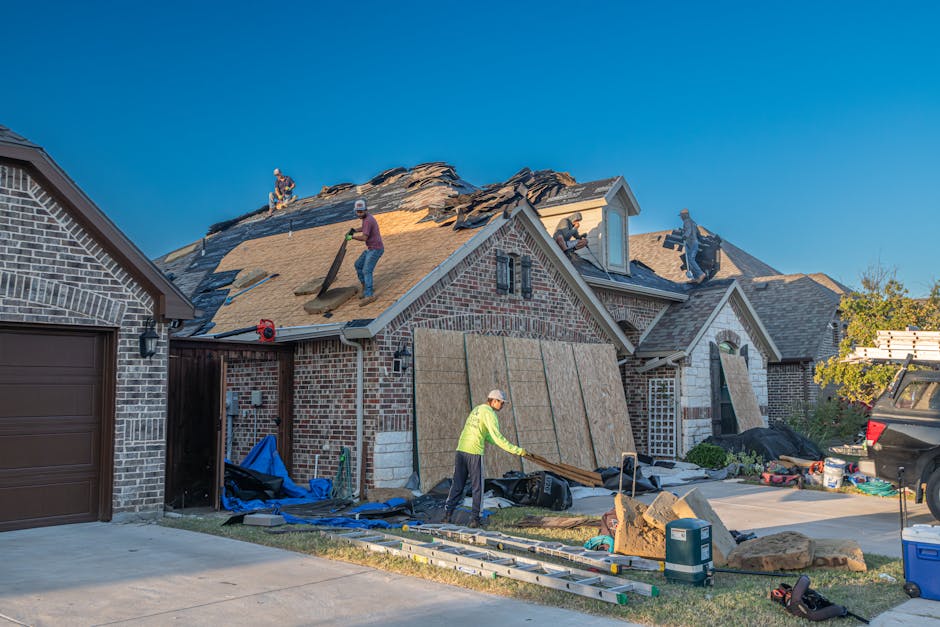
Tearoff Labor: Removing the old roof is included in the per-square price, but it's heavy work. A two-person crew can tear off 3–4 squares per day on a straightforward roof. Complexity, multiple layers, or old asbestos materials (rare now but possible on 1970s homes) slow this down significantly.
Crew Size and Timeline: A three-person crew (two installers, one laborer/material handler) is standard. Four or five people can finish a 20-square roof in 3 days; two people might take 5–6 days. Faster isn't always better—I've seen rushed installs with poor flashing work and nail placement. A properly paced job is better than a sprint job.
Experience Premium: Crews with 10+ year histories, roofing certifications, and strong references cost 10–15% more than newer contractors, and that money is worth it. These crews carry more insurance, handle unexpected conditions without panicking, and won't disappear if there's a warranty claim.
Permits and Inspection Costs
Permits run $300–$1,500 depending on your municipality, and skipping them is a common disaster I see. A few states (like Florida) and counties (particularly in the Northeast) require permits for any roof work; others are looser. If you sell the house later and a title search reveals unpermitted roofing, you could face a six-figure problem or be forced to pay for removal and replacement just to satisfy the buyer's lender.
What You're Paying For: The permit fee covers a code inspection (usually one visit before, one after), paperwork processing, and the municipality's overhead. It's not a scam—it's a protection. Most reputable contractors include the permit in their bid; if they don't mention it, ask directly.
Inspection Timing: Building inspectors typically come out after tearoff (to check decking) and after installation (to verify fastening, flashing, and underlayment). Plan for these two visits; if the inspector flags issues, you pay for corrections before sign-off. In my experience, this happens on roughly 20% of jobs—usually minor flashing details or nail spacing—but it protects you.
Regional Variation: High-regulation areas (Massachusetts, New York, California) charge $500–$1,500. Southern states and less-urbanized areas charge $300–$600. Some jurisdictions bundle it into a general building permit; others charge separately.
Cost Breakdown Table
| Line Item | Low Estimate | Mid Estimate | High Estimate |
|---|---|---|---|
| Shingles (composition) | $2,200 | $2,500 | $2,800 |
| Shingles (architectural) | $2,800 | $3,200 | $3,600 |
| Underlayment & flashing | $1,800 | $2,200 | $2,800 |
| Decking repairs (contingency) | $200 | $400 | $600 |
| Labor (tearoff + install) | $4,500 | $7,500 | $12,000 |
| Permits & inspection | $300 | $750 | $1,500 |
| Hauling & disposal | $400 | $600 | $1,000 |
| TOTAL (composition) | $9,200 | $13,950 | $20,700 |
| TOTAL (architectural) | $10,000 | $15,150 | $22,300 |
Where Contractors Overcharge (and How to Avoid It)
The Lowball Bid Trap: A bid that's 20–30% lower than competitors almost always means something's being left out. I watched a homeowner sign with a contractor who quoted $7,900 for a 20-square job (roughly 40% under market). After tearoff, the crew found rotted decking worth $3,000 in repairs. The homeowner was told it would be a $3,500 change order or the roof wouldn't be safe. The contractor had no incentive to be thorough in the estimate.
Vague Material Specifications: If your bid says "economy shingles" or "standard underlayment" without naming the brand or warranty, you don't know what's going under your roof. Demand a line-item breakdown with product names, warranty lengths, and ratings. GAF Timberline is different from Owens Corning Duration is different from store-brand shingles—same price might not mean same product.
Hidden Decking and Flashing Costs: Honest contractors quote decking repair as a contingency: "$X if less than 10% of decking is damaged; $Y per sheet if more." A contractor who refuses to estimate this is hoping to surprise you. Always ask for a worst-case scenario number.
Inflated Disposal Fees: Roofing debris is heavy—a 20-square tearoff generates roughly 20,000 pounds of material. Legitimate disposal (landfill or recycling) costs $400–$800. If someone quotes $1,500+ for hauling alone, they're padding. Some contractors partner with waste haulers and take a kickback; that's fine if disclosed, but get the rate in writing.
Warranty Scams: Read the fine print. A 30-year shingle warranty covers material defects, not wind, hail, or poor installation. Some contractors offer an inflated "labor warranty" (e.g., "25 years of free repairs") that's worthless if they go out of business in five. Stick with manufacturer warranties plus a 5–10 year workmanship guarantee from the contractor.
- Lowball bids (20–30% under market) hide change orders later
- Vague material specs let contractors substitute cheap alternatives
- Unquoted decking repairs surprise you mid-project
- Inflated hauling fees; get rate in writing
- Unreadable warranty fine print; confirm coverage limits
Red Flag Warnings: Contractor Scams
"We're in the neighborhood and can do it this week for cash discount": This is the classic fly-by-night scam. A crew shows up, tears off your roof, takes payment, and vanishes if problems arise. There's no permit trail, no insurance verification, and no recourse. Legitimate contractors book weeks in advance and have established local reputations. Ask for three references and call every one.
Pressure to use their financing or sign before inspection: If a contractor won't walk your roof with you beforehand or pushes you to finance through them before a full estimate, they're hiding something. A real inspection takes 20–30 minutes and includes photos. If they quote without climbing on your roof, they're guessing.
"Permit isn't necessary": Some contractors claim they can save you money by skipping the permit. This is illegal and exposes you to liability, fines, and problems at sale time. Any contractor suggesting this doesn't respect code or you. Walk away.
Uninsured crews: Always verify workers' compensation and general liability insurance directly with the insurer (don't just take the contractor's word). An uninsured worker who gets injured on your property can sue you personally. I've seen homeowners liable for six-figure medical bills because they hired a "cheaper" crew without checking.
No written contract or vague scope: If the estimate is on a napkin or missing details like flashing type, decking contingency, or cleanup responsibility, you have no protection. A contract should specify materials by brand/model, labor per-square rate, timeline, payment schedule (50% down, 50% at completion is standard), and warranty terms.
- Door-to-door crews offering same-week cash deals with no permit
- Pressure to finance or sign before a roof inspection
- Claims that permits aren't needed or are optional
- Unverified insurance; always confirm directly with insurer
- Estimate on paper napkin; no written contract with spec details
Getting Accurate Bids
Call three to five contractors and get written bids. Don't cheap out on this—it takes an afternoon to organize. A quality bid includes roof measurements (length × width or square count), materials by product name and warranty, labor rate per square, permit cost, decking contingency, timeline, insurance verification, and workmanship warranty details.
What to Ask During the Bid Walk: Ask the contractor what they found last time they tore off a roof—did they see moisture, rot, mold, or ventilation problems? A contractor with local experience knows what your roof age and style typically hides. Ask about their crew—are they W-2 employees or subcontractors? Employee crews are usually higher quality and more accountable than rotating subcontractors.
Payment Terms: Standard is 50% at signing, 50% on completion (after inspection passes). If someone demands full payment upfront, that's a red flag. Some contractors ask for 50/25/25 if the job spans multiple weeks, which is reasonable. Never pay for materials you haven't received.
Timeline Expectations: A 20-square roof should take 3–5 days of active work, plus 1–2 weeks for permit processing and inspection scheduling. Bad weather (rain, extreme heat) can extend this. A contractor who promises 2 days on a full replacement is either lying or cutting corners.
When you get bids, ask each contractor to define 'decking contingency' in writing with a per-sheet cost. This one line item—which most homeowners skip over—is where change-order disasters happen. A honest contractor will quote it upfront; a bad one will lowball the base price knowing they'll hit you with $3,000 in extras once they open up the roof.
Frequently Asked Questions
How long does a roof replacement actually take?
A full replacement on a 2,000 sq ft home takes 3–5 days of active work for a three-person crew. Add 1–2 weeks for permit processing and inspector scheduling. Bad weather or hidden decking rot can add 2–4 days. The entire process from contract to final inspection typically runs 4–6 weeks.
Can I replace just part of my roof?
Only if the damage is isolated to one area and the rest of the roof is relatively new (under 15 years). A partial patch costs $1,500–$3,500 and works temporarily, but new shingles won't match old ones in color or aging. If your roof is 20+ years old, a full replacement is usually cheaper than multiple patches over the next 5 years.
What's the difference between removing old shingles and layering new ones?
Removing old shingles (tearoff) costs more upfront but lets inspectors check decking, prevents moisture buildup, and gives you a clean surface for new material. Layering (reroofing) is cheaper by $1,500–$2,500 but voids some warranties, hides problems, and adds weight to your structure. Most jurisdictions allow one layer; adding a second layer is often illegal.
Do I really need to pay for permits?
Yes. Skipping permits exposes you to fines (often $500–$2,000), denial of insurance claims if damage occurs, and sale complications if a buyer's inspector finds unpermitted work. Permits are mandatory in most states; check your local building department. Reputable contractors include permit costs in their bid.
What's the actual lifespan of different roof materials?
Composition shingles: 20–25 years. Architectural shingles: 25–30 years. Premium/luxury shingles: 30–50 years. These are under normal weather conditions; hail, high wind, and poor ventilation reduce lifespan by 5–10 years. Regular inspections after year 15 catch problems early and can extend life.
Should I go with the cheapest bid?
No. If a bid is 20–30% lower than others, something's missing—usually corners on materials, decking contingency, or crew experience. The mid-range bid typically reflects fair labor, quality materials, and reasonable profit. Save money by comparing material tiers (composition vs. architectural), not by betting on the lowest bidder.
The Bottom Line
Your roof replacement will run $8,500 to $18,000+ depending on materials, region, and what's hiding under the shingles. Get three written bids with full material specs and a decking contingency. Check insurance and references before signing anything. The difference between a $10,000 job done right and a $7,500 job done cheap shows up in five years as leaks, callbacks, and regret—and by then the contractor is gone. Spend the time now vetting bids properly, and you'll sleep better knowing the roof over your head was installed to code by people who stand behind their work.
Sources & References
- Lumber & Wood Products Producer Price Index at 270.3 (February 2026), keeping material costs more predictable — Bureau of Labor Statistics

Written by
James CrawfordHome Renovation Specialist
James spent 15 years as a licensed general contractor before becoming a consumer advocate. He has managed over 400 renovation projects and now helps homeowners understand true project costs before signing anything.
See all articles →